
 Call
Us
Call
Us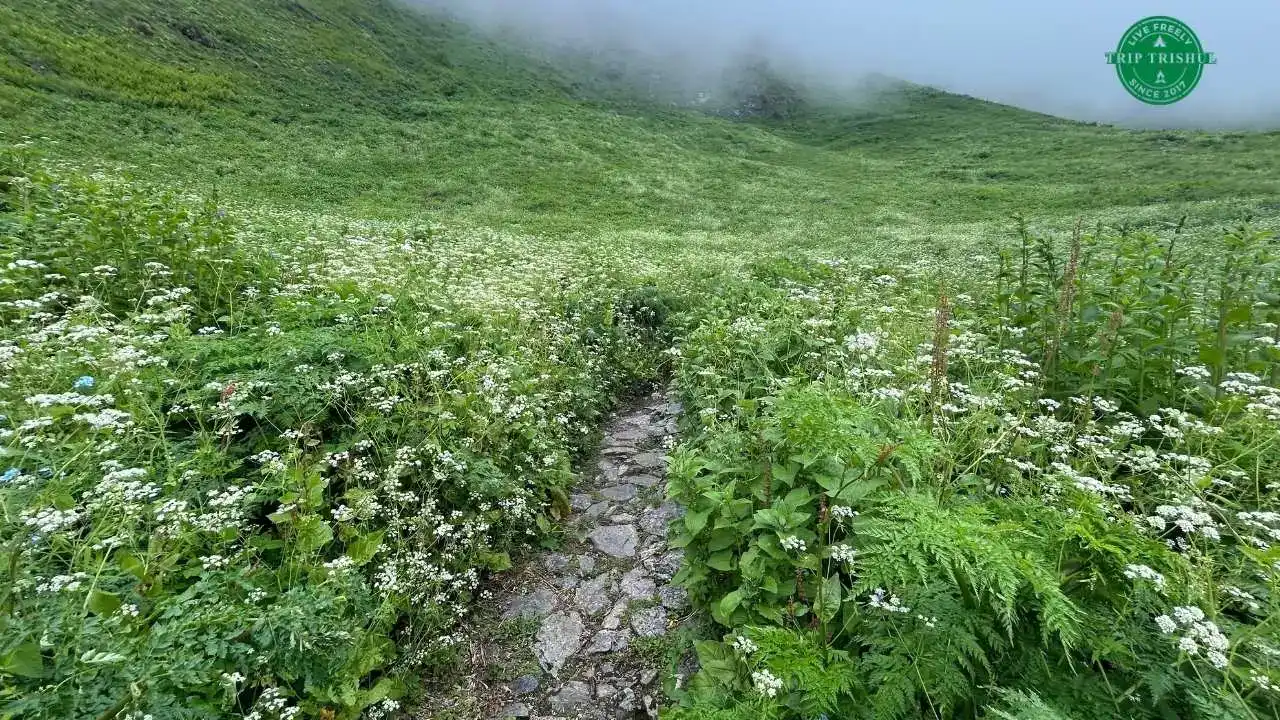
We will begin our journey to the Valley of Flowers from either Haridwar or Rishikesh, depending on your selected boarding location. You will have the chance to witness the confluence of the Bhagirathi and Alaknanda rivers at Devprayag when we depart early in the morning for Joshimath. You will arrive at Joshimath in the evening and spend the day in a comfortable hotel.
Our trip to Ghangaria will begin on day two. After breakfast, we will depart for Govindghat, so get ready in the morning. The Valley of Flowers treks begin at Govindghat. On the second day, we will trek up to Ghangaria, which is about 16 kilometers. Ghangaria is the base camp for the Valley of Flowers trek. There are many hotels in Ghangaria, and your stay will be arranged in one of them.
On day 3, we will trek towards the Valley of Flowers. Since the valley is a UNESCO World Heritage Site and is a part of the Nanda Devi Biosphere Reserve, there is no stay option in the valley. Which means we have to get back to Ghangaria on the same day. The distance you will cover is 4 kilometers one way. Starting after breakfast, the entire trip should take 6-7 hours to complete.
The added attraction of our Valley of Flowers tour package is the trek to Hemkund Sahib. The Hemkund Sahib trek is steeper than the Valley of Flowers. From Ghangaria, the distance is 6 kilometers one way. After offering your prayer at the Gurudwara and the Laksmana temple, behold the magnificent Hemkund Lake surrounded by towering, snow-clad mountains. After spending the day there, begin your evening trip back to Ghangaria.
It's time to return. After breakfast, we will begin our trip back to Govindghat. Depending on your desired drop-off location, our transportation will drive you from Govindghat to either Haridwar or Rishikesh.
Best Time to Visit the Valley of Flowers
Summer to pre-winter, which means from July to October, is the best time to visit the Valley of Flowers. An overview of the seasons and the best time to plan your trip is provided below:
The best seasons to visit the Valley of Flowers are summer and monsoon. Which means from June to the middle of September. During this time, the valley remains in full bloom with nearly six hundred flower species, creating a magical moment. Valley of Flowers in June remains pleasant with moderate temperatures and little to no rainfall. From mid-July to the end of August is the monsoon season. The valley remains open with full bloom, and the added advantage is that it remains less crowded.
Monsoon is over in the Valley of Flowers in September. During this time, the valley presents itself with new beauty. The monsoon rain makes the valley greener, and cotton clouds hanging on the surrounding mountains enhance its beauty by many folds. Valley of Flowers in October remains open, but the flowering season is nearly over, and the temperature drops to 4 degrees to 11 degrees centigrade.
Here is something you should know. Regardless of the month you visit, from June to October, you will always get to see flowers in the valley because all those 600 species don’t bloom together. Some bloom in June, some in July, and some in the following months.
Document Required for the Valley of Flowers Trek
Valid ID Proofs
Voter card
Aadhar Card
Driver's license
Passport (for international travelers)
Valley of Flowers Registration Permit
Starting this year, local and international travelers must obtain a Valley of Flowers registration permit. You can apply for this permit online, and if you are traveling with us, we will arrange it on your behalf.
What should I pack For The Valley of Flowers Trek?
Warm clothing: Thermals and woolens
Trekking shoes
Pair of socks
Rain gear
First aid kit with Pills and medications for allergies, nausea, and bodily aches
Food (snacks, biscuits, groundnuts, toffees, and dry fruits)
A flashlight or torchlight
How To Reach the Valley of Flowers
By Bus: Joshimath and Govindghat are the two nearest bus stations to the Valley of Flowers, and both of these points are well-connected by bus routes with Rishikesh and Haridwar. You can either take a bus to Joshimath, which is approximately 18 kilometers away from Govindghat. From Joshimath, you can take another bus trip or shared taxi to Govindghat. Or you can take a direct bus to Govindghat and start your trek.
By Plane: Book a flight to Jolly Grant Airport. This is the nearest airport to the Valley of Flowers. From Jolly Grant, you can book a cab to reach Govindghat or Joshimath.
By Train: Book a train ticket to Haridwar or Rishikesh. From these stations, shared cabs, buses, and private taxis are available to Joshimath and Govindghat.
By Shared Taxi: The option for shared taxi is available from Jolly Grant Airport, and Haridwar and Rishikesh railway stations.
Valley of Flowers Trek Highlights
UNESCO World Heritage site.
Famous for vast meadows and flowers of several species
A great spot for birdwatching.
Lush green landscape with undulating meadows and a water stream.
The Hemkund Sahib trek is a nearby attraction and can be completed in a single trip.
Moderate-level trekking is suitable for beginners.
Valley of Flowers Trek Preparation
The Valley of Flowers trek involves two sets of trekking on each side. From Govindghat to Ghangaria, it is 16 kilometers, and from Ghangaria to the Valley of Flowers, it is 4 kilometers. Although this trek is of a moderate level, a certain degree of physical fitness is required to complete the trek without stress.
To prepare yourself, you can opt for cardio exercises to increase the capacity of your lungs and heart strength, which will help you during the trek immensely. Plus, full-body exercises like running or swimming can give you the advantage of completing the trek easily without any stress.
How To Reach the Valley of Flowers from Delhi
From Delhi, you can reach the Valley of Flowers via road, rail, or air routes. You can take a train or a bus to Haridwar or Rishikesh, and from there you can board a private/shared taxi or bus to Joshimath or Govindghat. If you are traveling by air, then book your ticket to Jolly Grant Airport in Dehradun. From there, taxis are available for the rest of the distance.
Distance of The Valley of Flowers Trek
The total distance of the Valley of Flowers trek is approximately 20 kilometers, which you will complete in two parts. First, trek 16 kilometers from Govindghat to Ghangaria, and then another 4 kilometers of trek from Ghangaria to the Valley of Flowers.
Valley of Flowers and Hemkund Sahib
Valley of Flowers and Hemkund Sahib share the same trek trail up to Ghangaria. From Ghangaria, two separate trek routes head for the Valley of Flowers and Hemkund Sahib. Which means if you book the Valley of Flowers package, that instantly adds Hemkund Sahib to your trip plan. In this trip plan, you will first trek to Ghangaria, and after a night halt there, the next day is scheduled for the Valley of Flowers.
This is a 4-kilometer-long trek (one way), and we will complete it in a day. The next day, our destination is one of the highest Gurudwaras in the world, the Hemkund Sahib. This trek is a bit long, around 6 kilometers, and also steeper than the Valley of Flowers. The return will be on the same day. So, don't wait anymore; plan your Valley of Flowers trip now. Seats are filling fast!
FAQ
Where is the Valley of Flowers?
The Valley of Flowers is located in the Chamoli district of Uttarakhand.